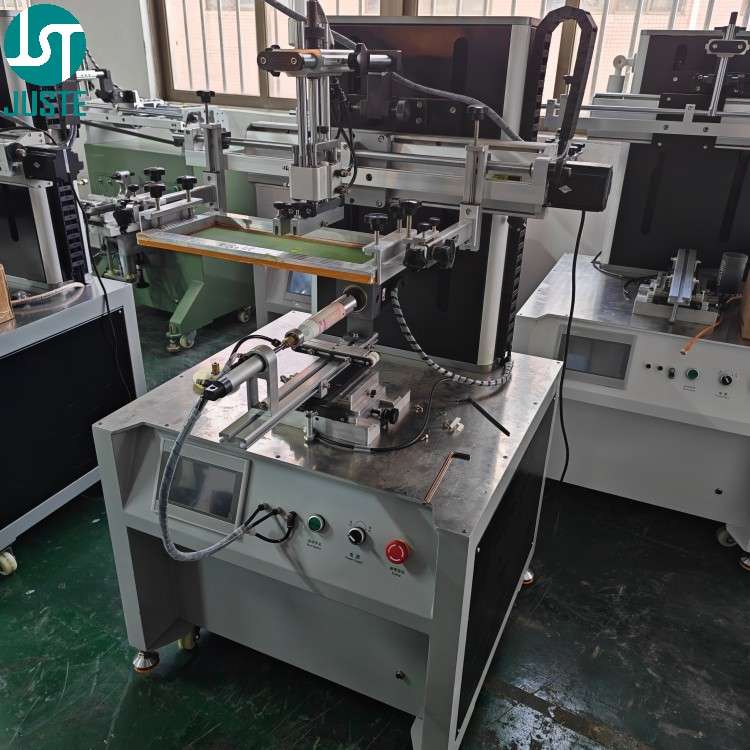
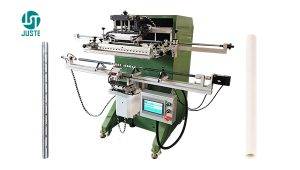
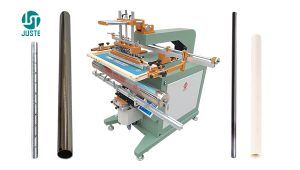
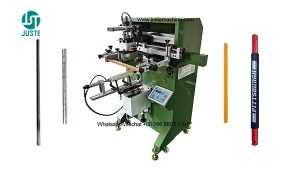
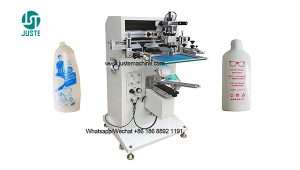
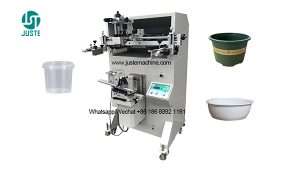
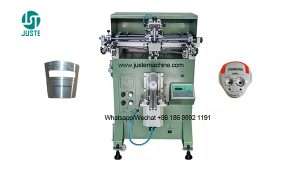
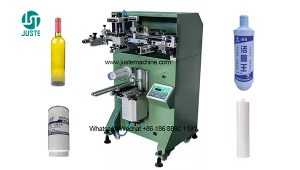
Factory owners and production managers often face the same frustrating challenge: printing high-quality logos on curved surfaces like bottles, cups, and cosmetic tubes. Misalignment between colors, slow production speeds, and high rejection rates eat into your profits. The semi automatic cylindrical screen printing machine JST-R400-CSM solves these problems with servo-driven precision and an intelligent optical registration system. This machine is specifically designed for round, conical, and cylindrical objects across multiple industries.
cosmetic tube screen printing machine on just machine factory
In this guide you will learn:
How the JST-R400-CSM achieves ±0.1mm registration accuracy
How to print 2-10 colors on cosmetic tubes and bottles with ease
Key Features That Set This Semi Automatic Cylindrical Screen Printing Machine Apart
±0.1mm Multi-Color Overprinting Accuracy: Each color aligns perfectly with the previous one. This eliminates misprints on expensive cosmetic tubes and reduces material waste to below 1%.
Leuze Optical Contrast Sensor for Auto Registration: The high-sensitivity German Leuze sensor reads the registration mark printed in Color 1, then automatically positions the tube for Colors 2 and 3. The operator simply loads the tube; the sensor handles the rest.
Electronic Gear Technology – No Gear Changes Required: Unlike older machines that require physical gear changes for different bottle diameters, the JST-R400-CSM uses electronic gear ratio calculation. Two INOVANCE servo motors communicate through the PLC to automatically adjust rotation speed based on product diameter. Simply enter the diameter on the touchscreen.
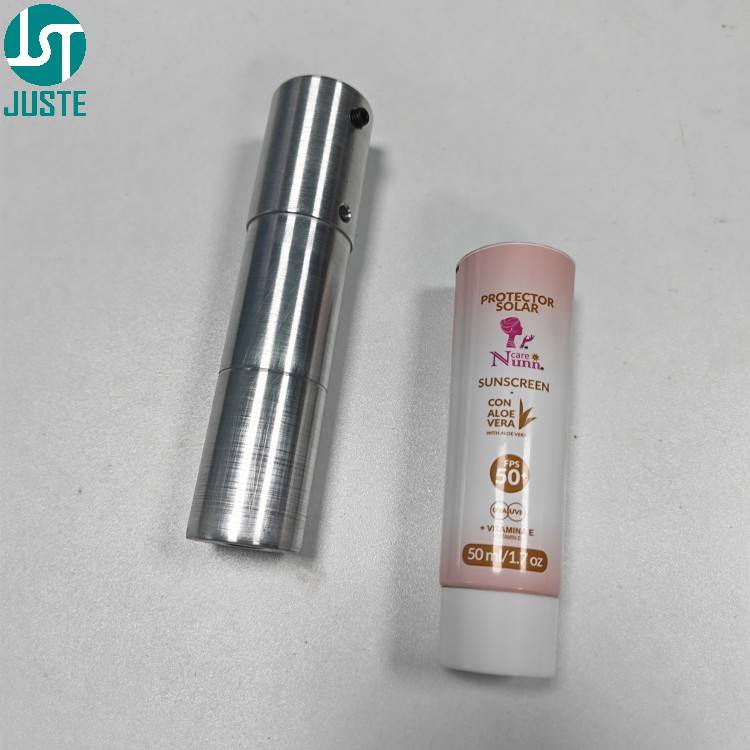
Custom Fixture Compatibility for Perfect Tube Fit: Universal mandrels cannot achieve 100% tube contact. Even 0.2mm of wobble causes visible misalignment between colors. Our CNC-machined custom fixtures eliminate this completely.
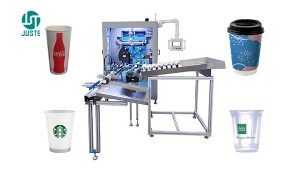
Convertible Design: Cylindrical, Conical, and Flat Surface Printing: This machine prints cylindrical bottles, conical cups (up to 40° taper), and flat surfaces with simple changeover. One machine covers all your screen printing needs.
Touchscreen PLC Control with Recipe Storage: Save up to 100 job recipes. Switching from a 30mm lip gloss tube to a 50mm cream bottle takes less than 5 minutes.
Technical Specifications at a Glance
Parameter
Specification
Model
JST-R400-CSM
Operation Type
Semi-automatic (manual loading/unloading)
Max Frame Size
600 × 400mm
Max Printing Length
400mm (600/800/1000/1200mm optional)
Max Printing Diameter
Full circle 127mm / Half circle 254mm (customizable)
Min Printing Diameter
3mm
Max Cone Angle
30-40° (beyond this causes pattern distortion)
Printing Speed
1500 pcs/hour
Control System
Touchscreen + PLC
Servo Motors
INOVANCE (customizable ABB/Fuji)
Color Sensor
Leuze (Germany)
Solenoid Valve
SMC (Japan)
Cylinder
AIRTAC (customizable SMC/FESTO)
Guide Screw
TBI (Taiwan)
Slide Guide
Hiwin (Taiwan)
Air Pressure
0.4-0.6 Mpa
Power Supply
220V/50Hz or 110V/60Hz, 2KW
Machine Size
90 × 80 × 140 cm
Machine Weight
205 kg (280 kg with wooden box)
HS Code
8443192900
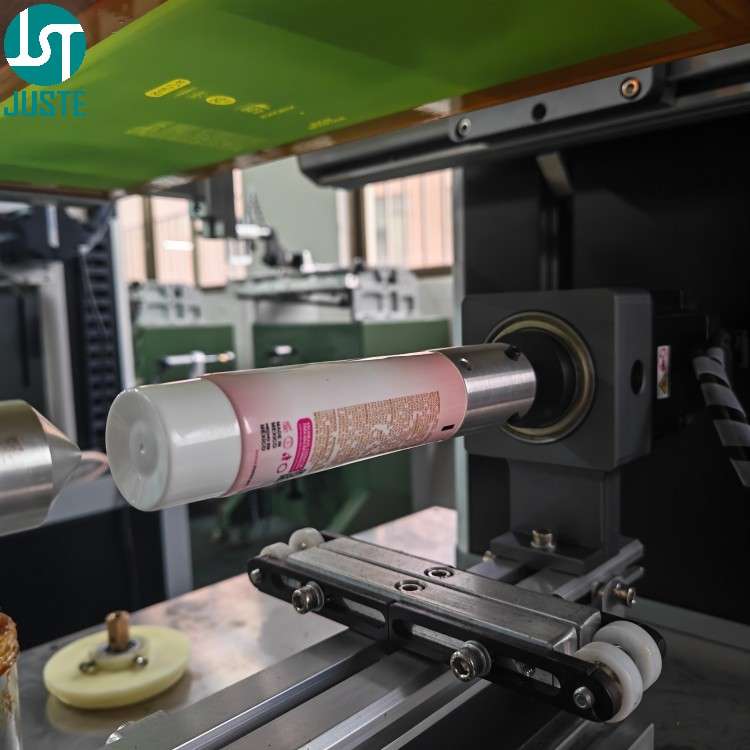
cosmetic tube fixture mold installed on screen printer
Applications: What Can You Print With This Bottle Screen Printing Machine?
The JST-R400-CSM semi automatic cylindrical screen printing machine serves diverse industries. From small cosmetic tubes to large coffee cups, this machine handles a wide range of products and materials.
By Material
Plastic (PP, PET, PVC, ABS, Acrylic, Silicone)
Glass (wine bottles, perfume bottles, honey jars)
Metal (aluminum cosmetic tubes, stainless steel bottles)
How the JST-R400-CSM Semi Automatic Cylindrical Screen Printing Machine Works
Step 1: Install Custom Fixture and Load Product
Operation: Install the custom fixture mold onto the machine’s rotation shaft. Place your bottle or tube onto the fixture – it should fit with light resistance.
Purpose / Principle: The custom fixture ensures the product sits at the exact same rotational starting point for every cycle. For conical cups, the fixture must match the taper angle.
Key Points to Note: If the product feels loose, the fixture needs adjustment. Even 0.1mm of play causes misalignment. Conical products always require custom fixtures.
Pro Tip: Order 3-4 identical fixtures for the same product size. This allows you to pre-load products while the machine runs, increasing output by 30%.
fixture mold for cosmetic tube and tube together
Step 2: Install Screen and Set Parameters on Touchscreen
Operation: Mount the screen onto the printing head. Enter product diameter on the touchscreen. Set squeegee pressure to 0.4-0.6 MPa.
Purpose / Principle: The electronic gear system automatically calculates the rotation ratio between the two servo motors based on your diameter input. No physical gear changes needed.
Key Points to Note: For multi-color jobs, print a registration mark with Color 1. The Leuze sensor will read this mark for Colors 2 and 3.
Pro Tip: Save your settings as a recipe. Next time you run the same product, load the recipe and start printing immediately.
silk screen frame with logo installed on screen printing machine
Step 3: Color 1 Printing
Operation: Press the foot switch or start button. The servo motor rotates the product into position. The printing head lowers and the squeegee traverses, transferring Color 1 onto the product.
Purpose / Principle: For cylindrical products, four wheels support the product. The screen movement drags the product to rotate smoothly. For conical products, the custom fixture ensures even contact across the tapered surface.
Key Points to Note: The registration mark must print clearly. A smudged mark will confuse the optical sensor for subsequent colors.
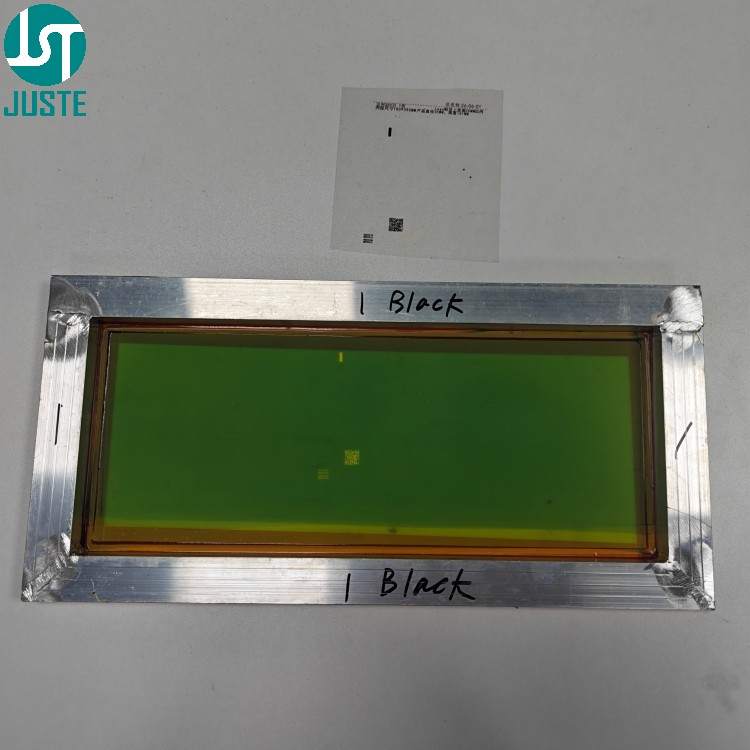
first color black silk screen frame with logo film sheet
Step 4: Automatic Registration for Color 2 Using Leuze Sensor
Operation: After Color 1 is dried, reload the same product. The Leuze sensor activates, detects the registration mark, and automatically repositions the product for Color 2.
Purpose / Principle: The sensor calculates the exact rotational offset and commands the servo motor to align the product so Color 2 prints perfectly over Color 1 – with ±0.1mm accuracy.
Key Points to Note: The sensor reads the original registration mark from Color 1 for every subsequent color, preventing error accumulation.
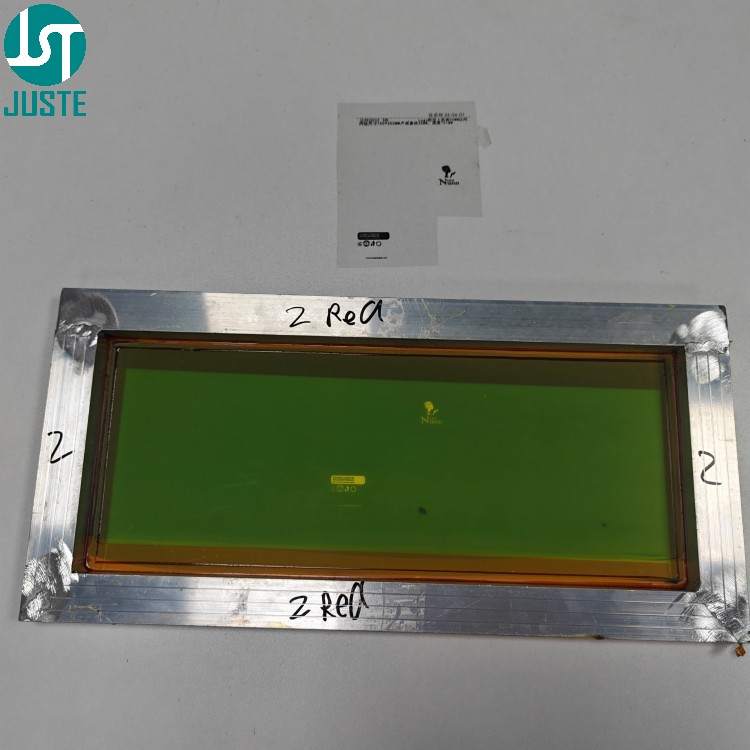
second color red silk screen frame with logo film sheet
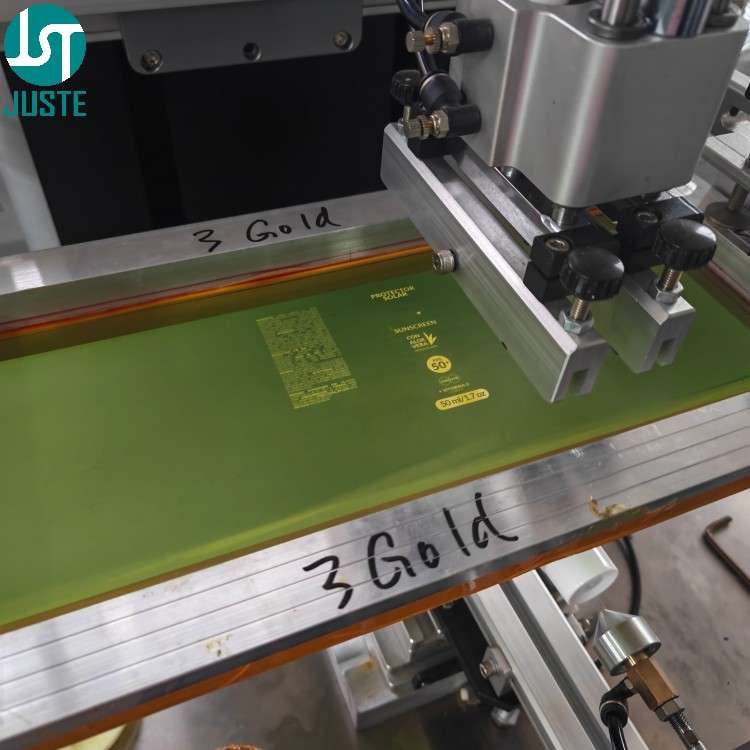
Step 5: Colors 2, 3, and Up to 10 Colors
Operation: Repeat the process for Color 2, Color 3, and up to 10 colors. The Leuze sensor handles registration for each color automatically.
Purpose / Principle: Each color layer builds on the previous one. The electronic gear system maintains consistent rotation ratio regardless of product diameter changes.
Key Points to Note: For 3-color jobs with fine details, print the darkest color first. Light colors printed over dark bases may look muddy.
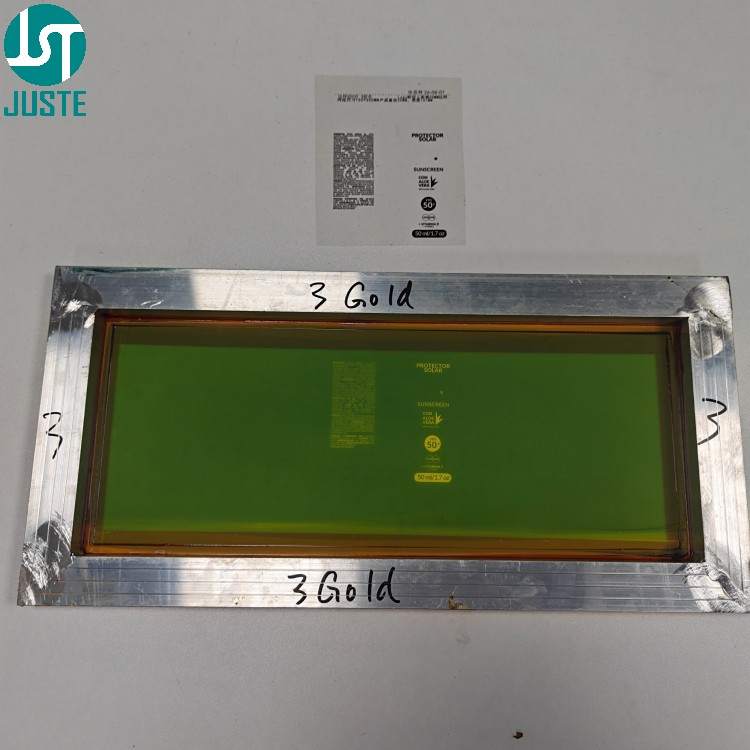
third color gold silk screen frame with logo film sheet
Step 6: Curing and Quality Check
Operation: After all colors are printed, pass products through a UV curing oven or IR dryer. Inspect finished products under good lighting.
Purpose / Principle: Curing locks in all colors simultaneously. For UV ink, a UV LED oven is required (sold separately). For solvent ink, air drying or IR drying works.
Key Points to Note: Any misalignment becomes permanent after curing – so inspect before curing.
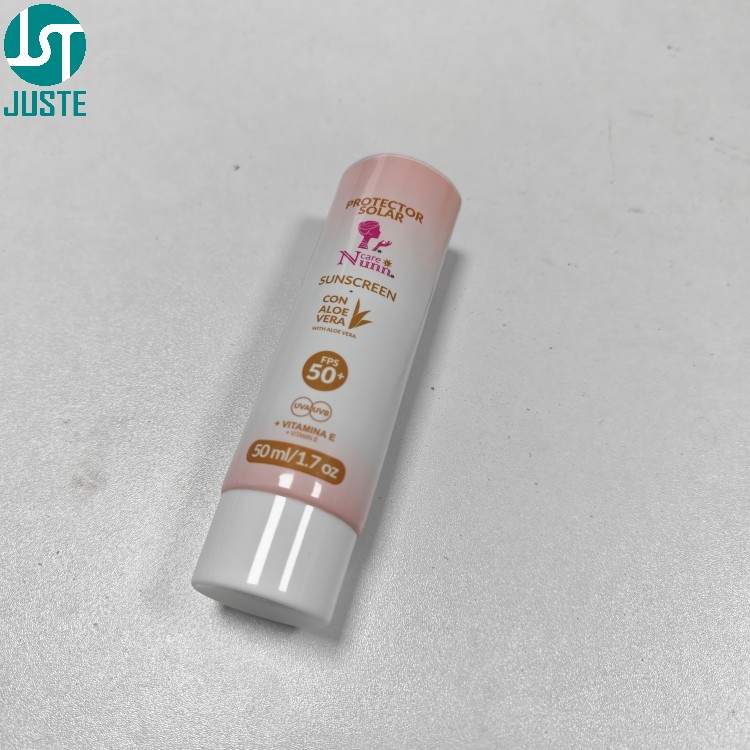
After use screen printing machine printing 3 color logo
Detailed Components: Built with Premium Global Brands
Description: The JST-R400-CSM uses two INOVANCE servo motors – one drives the screen left and right, the other rotates the product. The PLC calculates the electronic gear ratio between them for perfect synchronization. Customizable with ABB or Fuji.
Key Features:
Electronic Gear Ratio Calculation: No physical gear changes when switching product diameters
Description: The Leuze sensor is a German-made optical contrast sensor standard on the JST-R400-CSM. It reads registration marks with micro-registration precision for automatic multi-color positioning.
Key Features:
Fully Automatic Mark Detection: No manual micro-adjustment knobs needed
Works on Any Contrast: Detects logo against any background color
Description: The JST-R400-CSM uses Japan SMC solenoid valves and Taiwan AIRTAC cylinders – top-tier components that ensure long-term reliability and consistent pneumatic performance.
Key Features:
High-Cycle Durability: Rated for millions of cycles
Customizable Upgrade: Can upgrade to SMC cylinders or FESTO on request
Description: Imported TBI ground ball screws and Hiwin linear guides provide smooth, backlash-free motion for the printing head and fixture positioning.
Key Features:
Zero Backlash: Ensures consistent print pressure
Long Service Life: Rated for 10+ years of continuous operation
Frequently Asked Questions (FAQ)
Q: Are you a manufacturer or a trading company? A: Shenzhen Juste Machine Co., Ltd. has been a direct screen printing machine manufacturer since 2002. Our factory is located in Dongguan, China, and we welcome customer visits.
Q: Can this semi automatic cylindrical screen printing machine print on conical cups like milk tea cups? A: Absolutely. However, conical products require a custom fixture machined to your cup’s taper angle. The machine supports up to 30-40° taper – beyond this, pattern distortion may occur.
Q: What is the printing speed? A: The JST-R400-CSM operates at up to 1500 pieces per hour, depending on operator loading speed and product size.
Q: Do you provide a warranty and technical support? A: Yes, we offer a 1-year warranty on all machines, plus lifetime technical support, video training, and manuals. On-site installation is optional.
Q: How does the machine ensure precise multi-color registration? A: The machine uses two INOVANCE servo motors with electronic gear ratio calculation, plus a German Leuze optical sensor. The sensor reads the registration mark from Color 1 and automatically repositions the product for Colors 2, 3, and beyond – achieving ±0.1mm accuracy.
Q: What is your lead time for a customized machine? A: Standard machines ship within 15-20 working days. Custom fixtures require 7-10 working days after receiving sample products.
Q: Can I use UV ink with this machine? A: Yes, you can use UV ink. However, UV ink requires a separate UV curing oven (sold separately). Read our guide on UV Dryer vs IR Dryer for more information.
Q: How many sample tubes do you need to make a custom fixture? A: 5-10 sample products are ideal. We measure the inner diameter, outer diameter, length, and taper angle. The fixture is CNC-machined to ±0.05mm tolerance.
Ready to Upgrade Your Production Line?
Contact Juste Machine today for a free consultation and a customized quote including custom fixtures and screens.