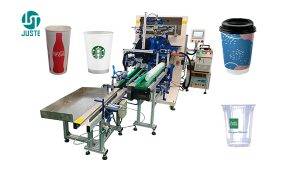
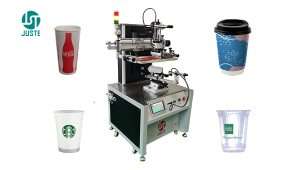
Hoogwaardige logo's printen op plastic bekers vereist precisie, consistentie en de juiste machineconfiguratie. De JST-R300-ACSM is een volledig automatische enkelkleuren zeefdrukmachine die speciaal is ontworpen voor randloze plastic bekers — PP en PET — met een optioneel upgradepakket dat precisie meerkleurendruk mogelijk maakt. Dit artikel behandelt de volledige 8‑station workflow, waarbij elke kritieke fase van aanvoer tot stapeling wordt behandeld. Of u nu print tumbler bekers, reistumblers, Starbucks‑stijl koude bekers, smoothie bekers, of fruittheekopjes, deze gids legt uit hoe elk onderdeel werkt – van de aangepaste fixture en coronabehandelaar tot de Leuze-contrastsensor (voor meerkleurregistratie) en het UV-uithardingssysteem. Bekijk hoe onze ingenieur Alan de machine en zijn optionele upgrades uitlegt, en boek dan een gratis live demo op uw eigen product met ons Engelssprekende ondersteuningsteam.
In dit artikel leer je:
- ✅ Hoe de 8‑stations draaitafel het volledige beker drukproces van begin tot eind automatiseert
- ✅ Waarom randloze plastic bekers zijn de perfecte match voor het toevoersysteem van deze machine
- ✅ Wat de optionele micro-registratie-upgrade (Leuze-sensor + 2 servomotoren) doet voor meerlagendruk
- ✅ Praktische oplossingen voor inktafbladderen, spookbeelden en schermonderhoud
Inhoud
- 1 Video: Ingenieur Alan legt de JST-R300-ACSM uit — Belangrijkste functies en optionele upgrades
- 2 Kernmogelijkheden in één oogopslag
- 3 Volledige 8-stationsworkflow: het printen van een randloze plastic beker
- 4 Veelgestelde vragen (FAQ)
- 5 Uw product, zelfde proces — Zie het live, in vloeiend Engels
- 6 Dit vind je misschien ook leuk
Video: Ingenieur Alan legt de JST-R300-ACSM uit — Belangrijkste functies en optionele upgrades
In deze video leidt onze ingenieur Alan je door de JST-R300-ACSM, waarin elke belangrijke functie wordt uitgelegd en de voordelen van het optionele upgradepakket worden benadrukt. Alan behandelt de workflow met de 8‑stationsdraaitafel, de rol van coronabehandeling voor PP/PE-materialen, het mechanisme van de printstation, het ingebouwde UV-LED-uithardingssysteem en het automatische stapelproces. Hij geeft ook een diepgaande blik op de micro‑registratie-upgrade — met de Duitse Leuze contrastsensor en twee extra servomotoren — die hoge precisie meerkleurenoverdruk op een eenkleurenmachine mogelijk maakt. Alan spreekt vloeiend Engels en beantwoordt technische vragen in realtime, net zoals hij dat zou doen in een privévideogesprek met u.
Kernmogelijkheden in één oogopslag
Print taps plastic bekers (PP, PET) — 4–32 oz — met volledig geautomatiseerde precisie. JST-R300-ACSM is een direct‑from‑manufacturer solution — ontworpen, geassembleerd en getest in onze 9.000+ m² Shenzhen-faciliteit.
| Capability | Specificatie |
|---|---|
| Products | Randloze plastic bekers (PP, PET), tapered cups & bowls |
| Capacity | 4 oz – 32 oz |
| Max Taper Angle | 30° |
| Maximale afdrukhoogte | 9 cm (volledige cirkel) / 18 cm (halve cirkel) |
| Output | 1600 – 1800 stuks/uur |
| Stations | 8-stations indexeerdraaitafel |
| Curing | Ingebouwde UV-LED-uitharding (instelbare timing) |
| Voorbehandeling | Ingebouwde coronabehandeling (voor plastic) |
| Automatisering | Auto feeding → corona → printen → UV-uitharding → lossen → stapelen |
| Controle | PLC touchscreen (meertalige ondersteuning) |
| Optionele upgrade | Leuze contrastsensor + 2 servomotoren voor meerkleurenoverdruk |
⚠️ Important: Deze machine is speciaal ontworpen voor tapered/conical plastic cups and bowls. Het is niet geschikt voor zuiver cilindrische containers.
Volledige 8-stationsworkflow: het printen van een randloze plastic beker
📌 Note: Deze sectie volgt een gestructureerde How‑To opmaak, waardoor het ideaal is voor HowTo Schema opmaak. Elke stap is een opeenvolgende actie die gebruikers kunnen volgen om het volledige afdrukproces op de JST-R300-ACSM te begrijpen.
Station 1: Bekervoeding — Automatisch laden
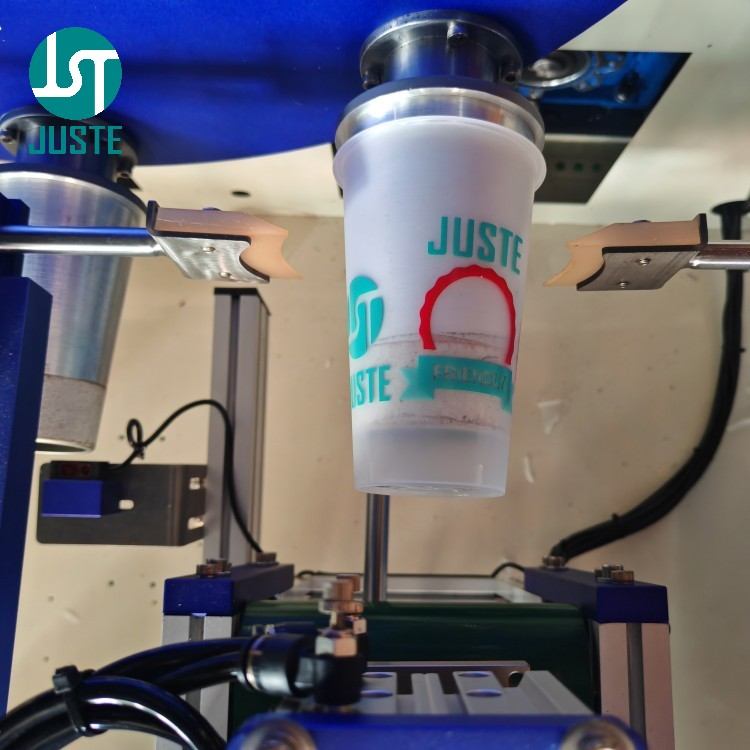
Werking: Een mechanische grijper pakt de blanco beker op en plaatst deze op de houder op de 8‑stations draaitafel.
Doel / Pr Deze voedingsmethode is bijzonder geschikt voor randloze plastic bekers. De grijper houdt het bekertje stevig vast zonder de rand te beschadigen, wat zorgt voor een consistente positionering voor het volgende printproces.
Belangrijke aandachtspunten: Voor plastic bekers met een rand, bieden we een andere oplossing die hogere snelheden bereikt — tot 4.000 kopjes per uur. Echter, voor randloze plastic bekers — die vaak worden gebruikt voor smoothie bekers, fruittheekopjes, En reistumblers — dit op grijpers gebaseerde toevoersysteem biedt de beste balans tussen snelheid en precisie.
Station 2: Coronabehandeling — Oppervlaktevoorbereiding
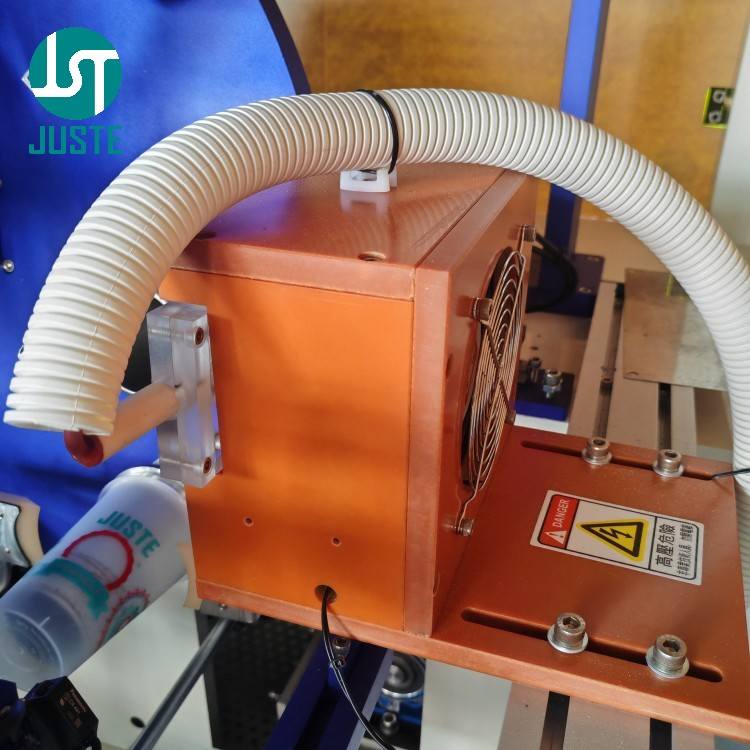
Werking: De beker passeert het coronabehandelingsstation, waar hoogfrequente elektrische ontlading de oppervlakte-energie van het plastic wijzigt.
Doel / Pr Voor plastic bekers — vooral PP-bekers — is de oppervlakte-energie van nature laag, wat leidt tot slechte inktadhesie. Coronabehandeling verhoogt de oppervlakte-energie, waardoor de inkt stevig aan het bezeroppervlak kan hechten.
Belangrijke aandachtspunten: Deze stap is essentieel voor PP- en PE-plastic bekers. Als u op papieren bekers of papieren kommen print, kan dit proces volledig worden overgeslagen.
Station 3: Productdetectie — Voorkomen van blanco afdrukken
Werking: Een sensor controleert of er een beker aanwezig is op de houder bij Station 3.
Doel / Pr Als de sensor geen kopje op de houder detecteert, de machine stopt automatisch en activeert een alarm. Dit voorkomt dat het printstation inkt op een leeg armatuur aanbrengt — waardoor inktverontreiniging en mogelijke machineschade worden vermeden.
Belangrijke aandachtspunten: Deze veiligheidsvoorziening beschermt zowel de machine als de operator. Zonder deze detectie zou inkt rechtstreeks op de metalen bevestiging worden geprint, wat tijdrovende schoonmaak vereist en mogelijk de toekomstige afdrukkwaliteit beïnvloedt.
Station 4: Printstation - De kernhandeling
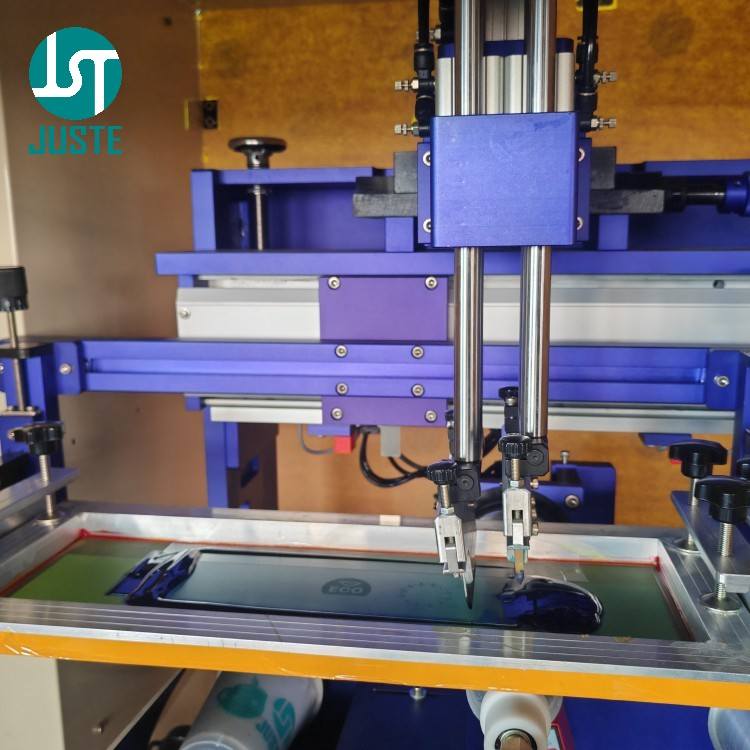
Werking: Het scherm beweegt van links naar rechts via een servogestuurde loodspindel, terwijl de bekerhouder synchroon roteert. De rakel drukt naar beneden en perst inkt door het gaas op het bezeroppervlak. (Het standaardmodel vereist handmatige aanpassing van de drukslag en wordt niet aangedreven door een servomotor.)
Doel / Pr De printslag moet correct worden ingesteld — groter dan de logobreedte, maar kleiner dan de omtrek van de beker op de afdrukpositie. Dit zorgt voor een volledige inktoverdracht zonder overlappende of ontbrekende gebieden.
Belangrijke aandachtspunten: De printslag is instelbaar via het touchscreen PLC. Operators kunnen de start- en eindposities nauwkeurig afstellen op basis van de specifieke logogrootte en cupdiameter. Deze flexibiliteit maakt de machine geschikt voor een breed scala aan plastic beker ontwerpen — van kleine logo's op 4 oz bekers tot full-wrap patronen op 32 oz tumbler bekers.
Station 4 (Upgrade-optie): Meerkleurenoverdruk — Leuze Contrastsensor + 2 Servomotoren
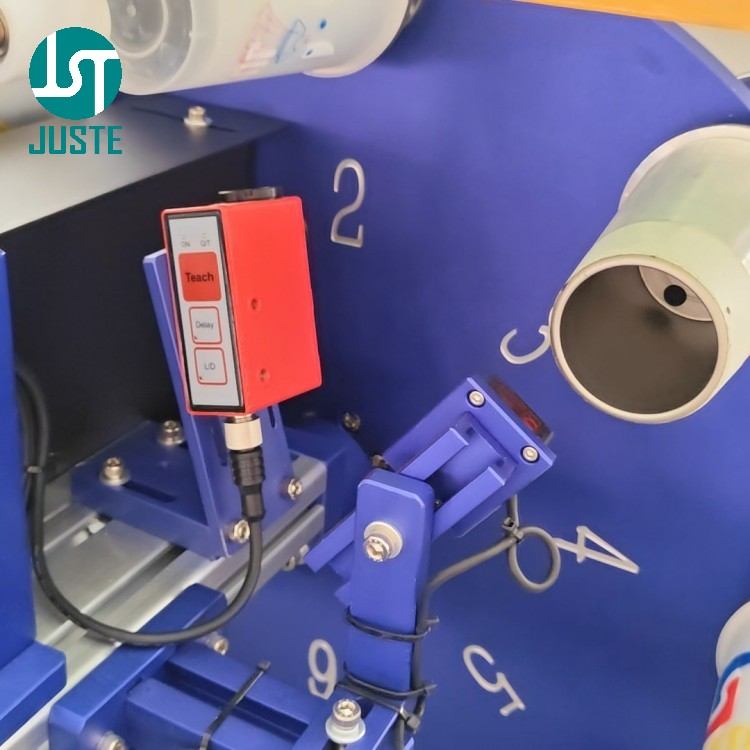
Werking: De Rood apparaat links is een Leuze-contrastsensor, dat registratiemerken op de beker of het scherm detecteert. De Het zwarte apparaat aan de rechterkant is een naadlijnsensor., die de naad van de papieren beker detecteert om er niet overheen te printen.
Doel / Pr Dit is een optioneel upgradepakket dat meerkleurenoverdruk op een eenkleurenmachine mogelijk maakt. Om dit te bereiken, moeten drie componenten samenwerken:
- ① Leuze contrastsensor — detecteert registratiemerken voor nauwkeurige kleur‑op‑kleur uitlijning
- ② Servomotor (schermbeweging) — bestuurt het schermframe van links naar rechts met hoge precisie
- ③ Servomotor (bevestigingsrotatie) — regelt de rotatie van de bekerhouder, gesynchroniseerd met het scherm
Deze drie componenten werken in gecoördineerde beweging om een zeer nauwkeurige registratie tussen kleuren te bereiken. De naadlijnsensor is specifiek voor papieren bekers met een zichtbare naad — het detecteert de naad en past de afdrukpositie aan om eroverheen te drukken te voorkomen.
Belangrijke aandachtspunten: Beide sensoren en de twee extra servomotoren zijn optional add‑ons, not part of the standard machine configuration. If you are printing single‑color jobs only, the standard JST-R300-ACSM without these upgrades is sufficient. For Starbucks‑style cups or other multi‑color designs, this upgrade is recommended.
Station 5: Inspection Station — Quality Check (Adjustment Use)
Werking: After printing, the cup passes through Station 5, which is used for visual inspection of the printed pattern.
Doel / Pr This station is primarily used during machine setup and adjustment. Operators can inspect the printed pattern for defects — such as misregistration, incomplete ink transfer, or blurred edges — without stopping the production line.
Belangrijke aandachtspunten: During normal high‑speed production, visual inspection may be performed periodically rather than on every cup. The station provides a convenient position for quality sampling without disrupting the workflow.
Station 6: UV Curing — Instant Ink Drying
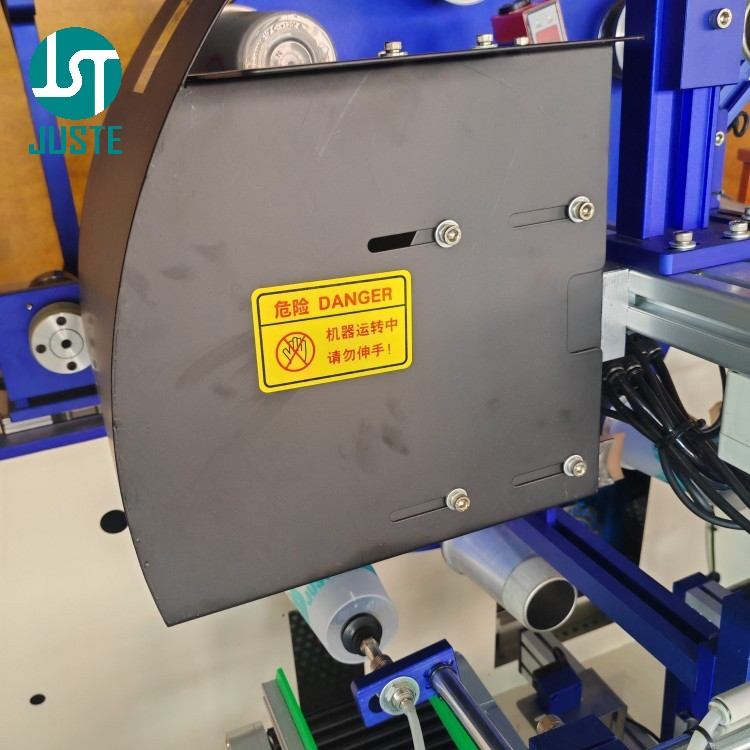
Werking: Immediately after printing, the cup enters the UV curing box, where UV‑LED light instantly cures the ink.
Doel / Pr UV inks are formulated to cure instantly when exposed to UV light. This provides immediate drying — no smudging, no waiting, no need for additional drying racks or ovens.
Belangrijke aandachtspunten: The UV curing time is adjustable via the touchscreen PLC. For different ink formulations and cup materials, the curing time may need to be fine‑tuned. UV LED curing is energy‑efficient En safe for plastic cups, as it does not generate excessive heat that could deform the cup.
Station 7: Unloading — Automatic Cup Removal
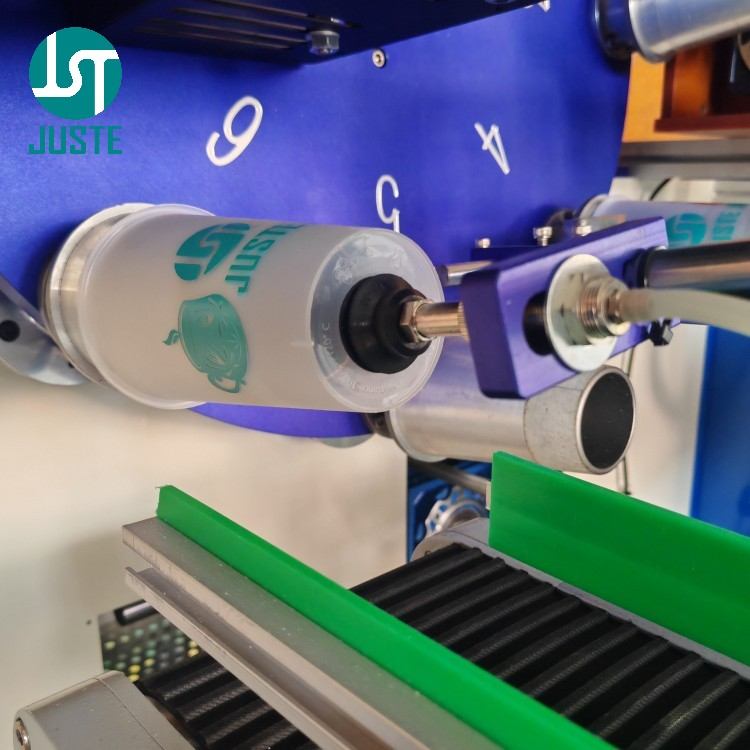
Werking: A rubber suction pad picks up the finished cup from the fixture and transfers it to the outfeed conveyor.
Doel / Pr The rubber pad creates suction that lifts the cup off the fixture, then moves it to the conveyor for stacking. This method is gentle on printed surfaces — the rubber does not scratch or smudge the freshly cured logo.
Belangrijke aandachtspunten: When designing the cup fixture, do not make it too tight. If the fixture grips the cup too firmly, the suction may not provide enough force to remove the cup, causing unloading failures. The fixture should hold the cup securely during printing but release it easily during unloading.
⚠️ Failure handling: If a cup fails to be removed at Station 7, it continues to Station 8, where a sensor detects the presence of the cup and triggers a machine stop and alarm. The operator must manually remove the cup from Station 8 before restarting production.
Station 8: Stacking & Counting — Finished Product Collection
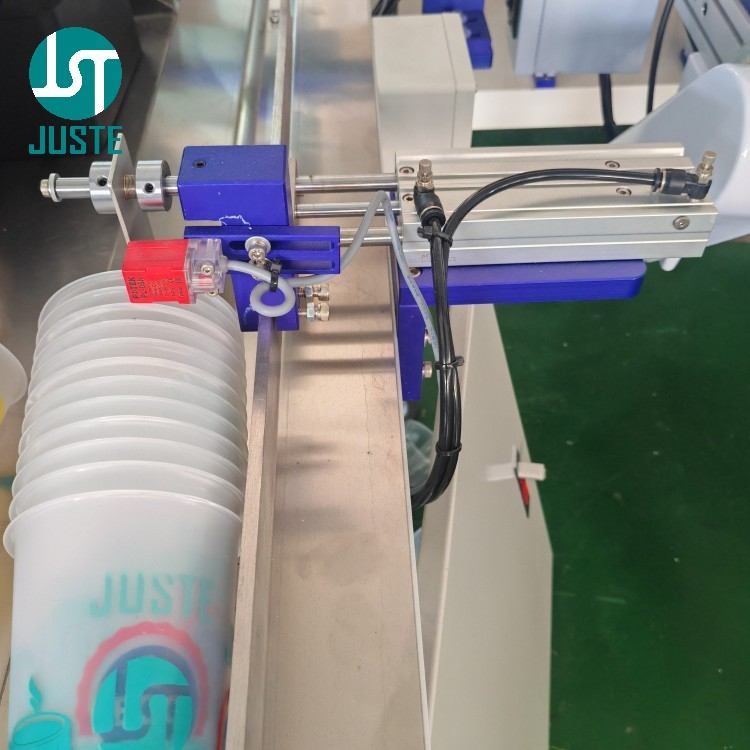
Werking: After curing and unloading, finished cups travel along the conveyor to the stacking area. The stacking mechanism collects cups and pushes them to the storage area once a preset count is reached.
Doel / Pr De automatic stacking system eliminates manual counting and stacking labor. Cups are stacked to a user‑defined quantity, then automatically pushed to the storage area — ready for packaging.
Belangrijke aandachtspunten: The stacking count is fully adjustable via the touchscreen PLC. Operators can set the desired number per stack based on packaging requirements. The entire process — from feeding to stacking — is fully automated, requiring no manual intervention.
Veelgestelde vragen (FAQ)
Q: Does this machine work for all types of plastic cups?
A: The JST-R300-ACSM is specifically designed for tapered/conical plastic cups — both PP and PET — in sizes ranging from 4 oz to 32 oz. It is bijzonder geschikt voor randloze plastic bekers, which are common for smoothie bekers, fruittheekopjes, En reistumblers. For pure cylindrical containers, we do not recommend this machine.
→ Send your cup specs for a free feasibility check →
Q: Why does my printed logo peel off when I add ice cubes to the cup?
A: This happens because standard screen printing inks become brittle and lose adhesion at low temperatures. For cold beverage applications — such as Starbucks‑stijl koude bekers or iced smoothie bekers — we recommend low‑temperature resistant PP screen printing ink, which maintains adhesion in freeze tests down to ‑5°C to ‑10°C.
→ Contact us for the right ink solution for your cold cups →
Q: What is the difference between the standard machine and the optional upgrade?
A: The standard JST-R300-ACSM is a single‑color machine. The optional upgrade adds a Leuze contrast sensor + 2 servo motors, enabling multi‑color overprint with high registration precision. The upgrade also includes a seam line sensor for paper cups. All of these are add‑on components, not part of the standard configuration.
→ Ask about the multi‑color upgrade for your machine →
V: Bent u een fabrikant of een handelsonderneming?
A: We are the manufacturer. Shenzhen Juste Machine Co., Ltd. has been designing and building screen printing equipment since 2013 in our own 9,000+ m² factory in Shenzhen. You can verify this during a free live video factory tour — our English‑speaking sales team will walk you through our CNC workshop, assembly lines, and QC stations in real time.
→ Schedule your free video factory tour →
Q: Kan ik de machine mijn product zien printen voordat ik betaal?
A: Absolutely. This is our standard practice. Send us a few blank samples and your artwork. We’ll custom‑machine a fixture (if needed), run the print test, and invite you to a live video demo — where you watch the machine print your product in real time, guided by our engineer. If you’re not convinced, you walk away with zero obligation.
→ Request your free sample print test + live video demo →
Uw product, zelfde proces — Zie het live, in vloeiend Engels
You’ve just watched our engineer Alan explain the JST-R300-ACSM and its optional upgrade capabilities. Now imagine getting a private, real‑time video walkthrough of your own plastic bekers being printed, guided by our 20‑year PLC engineer — alles in vloeiend Engels, met nul communicatiebarrières.
- 🔹 Stap 1: Send us your design and a few blank cup samples.
- 🔹 Stap 2: We’ll custom‑machine a fixture (in‑house CNC, ±0.01 mm) and run your print test.
- 🔹 Stap 3: We go live on video — our English‑speaking engineer shows you everything, answers your technical questions on the spot, and you see the final print result in real time.
Er is geen enkel risico. If you’re not 100% convinced, you walk away with no obligation. And before shipping, we’ll do a pre‑shipment video inspection with you, so you know exactly what’s in the crate.
Not sure which screen printing machine fits your plastic bekers? Or need a custom fixture for your specific taper angle?
👇 Klik op mijn foto hieronder om direct met mij te chatten via WhatsApp — ik stuur u binnen 8 uur een gratis offerte op maat.

Alan
🟢 Nu online — re
Hallo, ik ben Alan, uw expert in printoplossingen.
Klik op mijn foto om te chatten op WhatsApp voor een gratis offerte of plan een live video demo now.
📧 E-mail: Alan@justcig.com
💬 WhatsApp: Klik om te chatten(opent in nieuw tabblad)
🌐 Website: www.justemachine.com(opent in nieuw tabblad)