
Contents
UV Ink and Solvent Ink: An In-Depth Comparison of Printing Technologies
Amidst the bustle of a printing shop floor, an operator waits anxiously beside one machine for freshly printed sheets to dry. Nearby, another worker feeds printed items under ultraviolet lamps; within seconds, the finished products are ready for immediate stacking and packing. This stark visual contrast is the most direct portrayal of the difference between UV inks and solvent inks. When printing companies face process upgrades, environmental transitions, or demands for specialized products, understanding the fundamental distinctions between these two ink types becomes crucial, impacting cost, efficiency, and product quality.
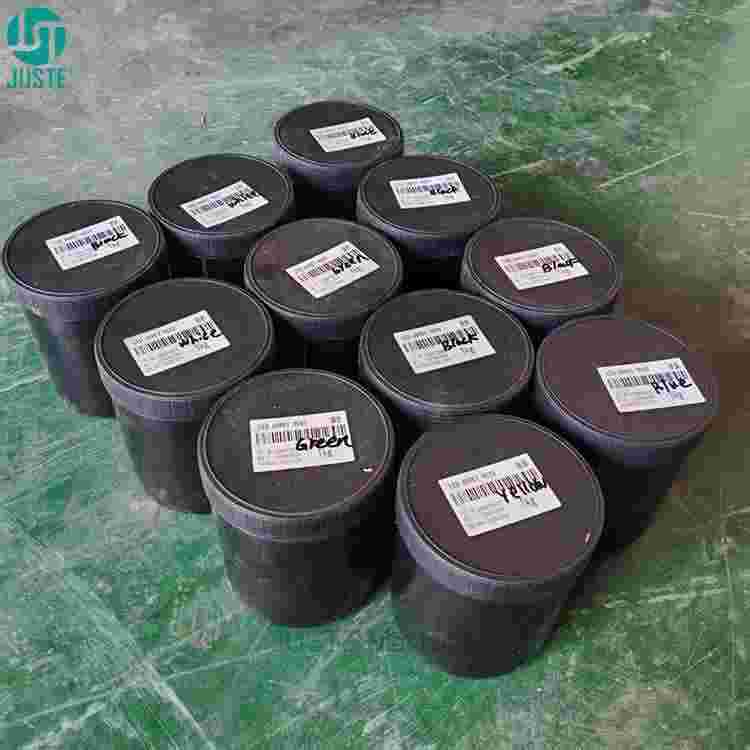
I. Core Differences: Chemical Basis and Drying/Curing Principles
UV Inks (Ultraviolet-Curing Inks)

Composition: The core components are reactive monomers (forming the main body of the ink film), oligomers (providing final properties like hardness and flexibility), and photoinitiators (critical! They absorb UV light and initiate the polymerization reaction).
Drying/Curing Principle: Photochemical polymerization reaction. When high-intensity ultraviolet (UV) light of a specific wavelength (typically 200-400nm) irradiates the ink, the photoinitiators are activated, generating free radicals or cations. These instantly initiate a chain polymerization reaction (cross-linking) of the monomers and oligomers. The ink transforms from a liquid state into a hard, solid ink film almost instantaneously (typically <1 second). This process represents a fundamental change in physical state.
Industry Shift: Major brands now offer “Zero VOC” certifications for food-contact packaging, complying with FDA 21 CFR and EU 10/2011 regulations.
Solvent Content: Very low or zero Volatile Organic Compounds (VOCs). Film formation relies primarily on a chemical reaction, not solvent evaporation.
Solvent Inks (Evaporative Inks)
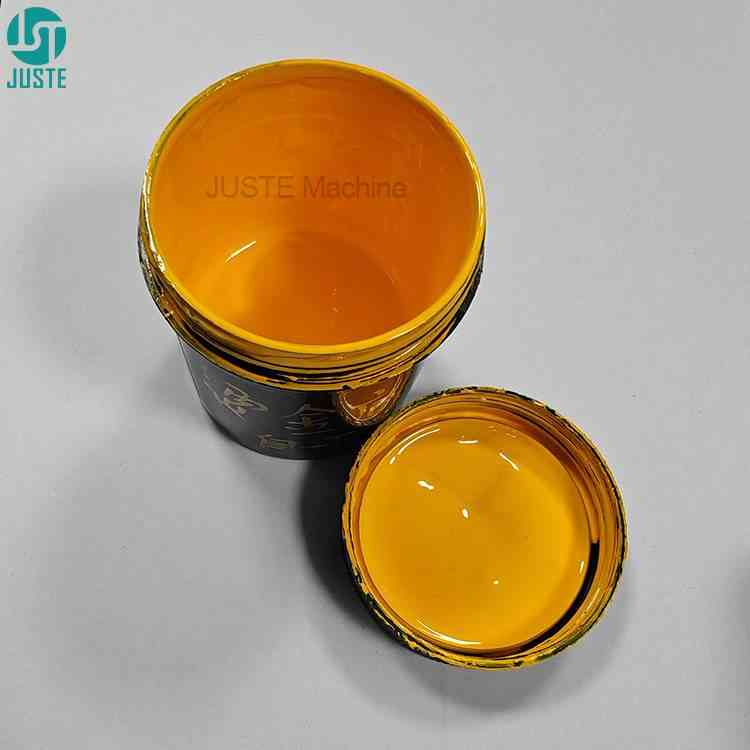
Composition: Primarily consists of resins (providing adhesion, gloss, etc.), pigments (providing color), and large quantities of organic solvents (e.g., toluene, xylene, ethanol, esters, ketones).
Drying Principle: Physical evaporation. After the ink is transferred to the substrate, the organic solvents evaporate into the air. The remaining resin, encasing the pigment, adheres to the substrate surface to form the ink film. Drying speed depends primarily on the evaporation rate of the solvents.
Safety Alert: Toluene-free formulations are becoming industry standard due to neurotoxicity concerns, with acetone/ethanol blends gaining traction.
Compliance Note: US EPA Subpart KK and EU Industrial Emissions Directive mandate 90%+ VOC capture systems for new installations.
Solvent Content: Contains a high proportion of Volatile Organic Compounds (VOCs). These solvents are the core vehicle enabling drying and performance.
II. Key Characteristics Arising from Core Differences
UV Ink Characteristics:
Drying Speed: Extremely fast (instantaneous curing, typically <1 second).
Energy Consumption: Low (electricity consumed only during the brief curing moment).
VOC Emissions: Very low or none (no solvent evaporation).
Odor: Almost odorless after curing (no solvent residue).
Ink Film Properties: Excellent (high gloss, high hardness, strong abrasion resistance, good chemical resistance).
Substrate Range: Wide (paper, plastic, metal, glass, wood, etc., especially excels on non-absorbent materials).
Adhesion: Typically superior on non-absorbent materials (chemical bonding).
Printability: More difficult to control (viscosity sensitive to temperature, requires precise temperature control; may require special plates/blankets).
Equipment Requirements: Requires dedicated UV curing units (mercury lamps, LED-UV, etc.).
Initial Investment: Higher (UV curing equipment is expensive).
Operational Costs: Lower (low energy consumption; virtually no solvent consumption; printed products can be handled immediately).
Environmental Friendliness: Excellent (low VOCs, better compliance with environmental regulations).
Safety: Requires attention to UV light exposure and contact with uncured ink.
Post-Press Processing: Can be performed immediately after curing (die-cutting, laminating, etc.).
Weather Resistance: Typically superior (cross-linked structure is more stable).
Recyclability: Complex (cross-linked polymers are difficult to process).
Solvent Ink Characteristics:
Drying Speed: Slower (depends on solvent evaporation, taking seconds to minutes, or even longer).
Energy Consumption: High (requires continuous heating in drying tunnels/ovens, consuming significant thermal energy).
VOC Emissions: High (large amounts of solvents evaporate into the air).
Odor: Noticeable solvent odor during printing and in the initial period after printing.
Ink Film Properties: Relatively ordinary (gloss, hardness, abrasion resistance generally inferior to UV).
Substrate Range: Limited (more suitable for absorbent materials like paper, cardboard; adhesion may be poor on non-absorbent materials).
Adhesion: Good on absorbent materials; non-absorbent materials require special treatment or inks.
Printability: Easier to operate (mature technology, familiar to press operators).
Equipment Requirements: Requires large hot air drying systems/tunnels.
Initial Investment: Lower (though drying system costs are still significant).
Operational Costs: Higher (high energy consumption; continuous solvent consumption; drying occupies significant space, low efficiency).
Environmental Friendliness: Poor (high VOCs, facing increasingly stringent environmental restrictions).
Safety: Requires attention to flammability/explosion risks and health hazards from solvent evaporation.
Post-Press Processing: Requires thorough drying before proceeding (otherwise prone to smudging and blocking).
Weather Resistance: Average (especially prone to fading and chalking with long-term outdoor use).
Recyclability: Relatively simpler (but contains solvent residues).
III. Typical Application Scenarios
UV Inks:
High-end Packaging Printing: Cosmetic boxes, pharmaceutical boxes, cigarette packs, liquor labels (requiring high gloss, abrasion resistance, scratch resistance, environmental friendliness).
Label Printing: Self-adhesive labels (especially filmic labels requiring immediate die-cutting/laminating).
Commercial Printing: Items needing special effects (spot UV coating, textured varnish), fast-turnaround book covers, brochures, business cards.
Specialty Printing: Plastic cards (e.g., credit cards, membership cards), metal printing, glass printing, electronic product panels.
Areas with Strict Environmental Requirements: Food, pharmaceutical, toy packaging (requiring low migration, low odor).
Innovation Spotlight: UV-LED formulations now enable printing on heat-sensitive PET medical devices (<50°C cure temp).
Situations requiring immediate post-press processing.
Solvent Inks:
Flexographic Printing: Flexible packaging (food bags, plastic bags), corrugated box pre-printing, paper bags, shopping bags, labels (especially on absorbent materials).
Gravure Printing: Long print runs, flexible packaging (laminated films), decorative paper, wallpaper, transfer paper.
Screen Printing: Textile printing, large-format outdoor advertising, signage, electronics (special solvent-based inks).
Cost-sensitive long print runs.
Hidden Cost: Solvent losses through “fugitive emissions” account for 15-30% of total VOC output in unsealed presses.
Printed products requiring high flexibility (e.g., flexible packaging).
On specific non-absorbent materials (requires special solvent inks or primers).
Printing plants constrained by initial investment budgets.
IV. Key Factors for Selection
Choosing between UV and solvent inks requires a comprehensive evaluation of the following key points:
Substrate Material Type: Absorbent or non-absorbent? UV has a significant advantage on non-absorbent materials.
Product Performance Requirements: Is high gloss, high hardness, strong abrasion resistance, or chemical resistance needed? UV is typically superior.
Production Efficiency and Delivery Time: Is instantaneous drying and immediate post-press processing required? UV can significantly boost efficiency.
Environmental Regulations: Are local VOC emission restrictions stringent? UV is the more environmentally friendly choice.
Cost Budget:
Initial Investment: UV curing equipment costs are significantly higher than hot air drying systems.
Operational Costs: UV ink unit price is usually higher than solvent ink. However, its extremely low energy consumption (electricity savings), near-zero solvent consumption, saved drying space/time, reduced waste (less smudging), and lower VOC treatment costs often make it more economical in the long run, especially for high-value-added products and high-efficiency production.
Safety and Health: Risks associated with UV light exposure and solvent evaporation (flammability/explosion and worker health) must be managed.
Order Characteristics: Long runs or short runs? UV may require more frequent plate changes/cleaning, but its efficiency advantage for short runs is clear.
V. Summary
UV inks and solvent inks represent two fundamentally different technological paths. Solvent inks rely on solvent evaporation for film formation; they are a mature technology with lower initial costs, but face challenges of high VOC emissions, slow drying, high energy consumption, and significant environmental pressure. UV inks achieve instant film formation through photo-initiated polymerization, offering unparalleled drying speed, excellent ink film properties, very low VOC emissions, and outstanding performance on non-absorbent substrates. They represent a more efficient and environmentally friendly future direction for printing, despite requiring higher initial equipment investment and more precise process control.
The choice is not a simple binary one, but rather a deep trade-off based on specific product requirements, material characteristics, cost structure, environmental regulations, and production efficiency goals. As environmental regulations tighten and market demands for print quality and efficiency increase, the advantages of UV inks become increasingly prominent. With the development and proliferation of LED-UV curing technology (lower energy consumption, longer life, less heat generation), the applicability and cost-effectiveness of UV printing will continue to expand. Understanding the fundamental differences between these two technologies is a crucial step for printing companies to make informed technical decisions and enhance competitiveness.
When UV lamps replace lengthy drying tunnels on the printing shop floor, when workers no longer worry about solvent odors and flammability risks, when printed products boast a mirror-like gloss and solid texture – behind these transformations lies UV ink technology quietly reshaping the boundaries and possibilities of the printing industry. Driven by both environmental and efficiency imperatives, UV ink is not merely an alternative option; it is becoming the new standard in the realm of high-quality, high-value-added printing.
Emerging Challenge: UV microplastics from abrasion are under EU REACH investigation – next-gen oligomers must address circular economy demands.
Counterpoint: Solvent retains dominance in developing markets where electricity reliability issues make UV curing problematic.
Contact Us
Phone: +8618688921191
Whatsapp/wechat: +8618688921191
Email: [email protected]
Home View More