
Contents
- 1 UV Dryer VS IR Dryer Video DisPlay
- 2 I. Core Principles: Light vs Heat
- 3 II. UV Oven vs IR Oven for Screen/Pad Printing: Key Selection Factors
- 4 III. Recommended Application Scenarios
- 5 IV. Advanced UV Oven Choice: Mercury Lamp vs LED UV
- 6 V. Conclusion: No “Best” Technology – Only the “Best Fit” for Your Needs
UV Dryer VS IR Dryer Video DisPlay
In the world of screen printing and pad printing, transferring intricate designs onto substrates is only the first step toward success. Ink curing – the process of transforming liquid ink into a durable, high-performance solid coating – is the crucial final step in your production workflow. Choosing the wrong curing equipment doesn’t just risk inefficiency and energy waste; it can lead to catastrophic outcomes like poor ink adhesion, product defects, and costly scrap rates.
Ultraviolet (UV) curing ovens and Infrared (IR) curing ovens are the two dominant technologies for post-printing curing today. While both achieve ink solidification, their underlying principles, strengths, and limitations differ dramatically. This comprehensive guide dives deep into UV vs IR curing technology, empowering you to make the smartest choice for your screen or pad printing operation.

I. Core Principles: Light vs Heat
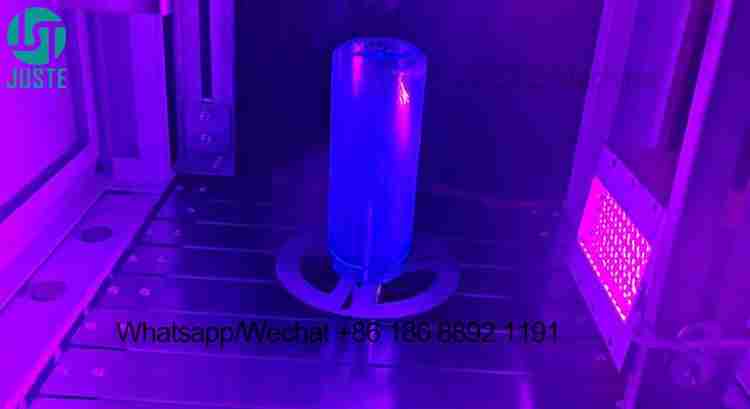
1. UV Curing Oven (UV Oven/Tunnel):
Principle: Harnesses the energy of ultraviolet (UV) light at specific wavelengths (primarily UVA band, ~365nm).
Process: When UV light irradiates UV-curable inks/coatings (which contain photoinitiators), these photoinitiators absorb UV photons. This triggers an immediate photochemical reaction, generating highly reactive free radicals or cations. These active particles instantly initiate chain polymerization and cross-linking reactions within the ink’s resins (prepolymers and monomers). This transforms the liquid coating into a dense, solid film in mere seconds or even fractions of a second.
Key Components: UV light source (Mercury arc lamps, Metal Halide lamps, or modern LED UV arrays), precision reflectors (to focus energy), cooling system (to manage lamp heat), conveyor belt.
2. Infrared Curing Oven (IR Oven/Tunnel):
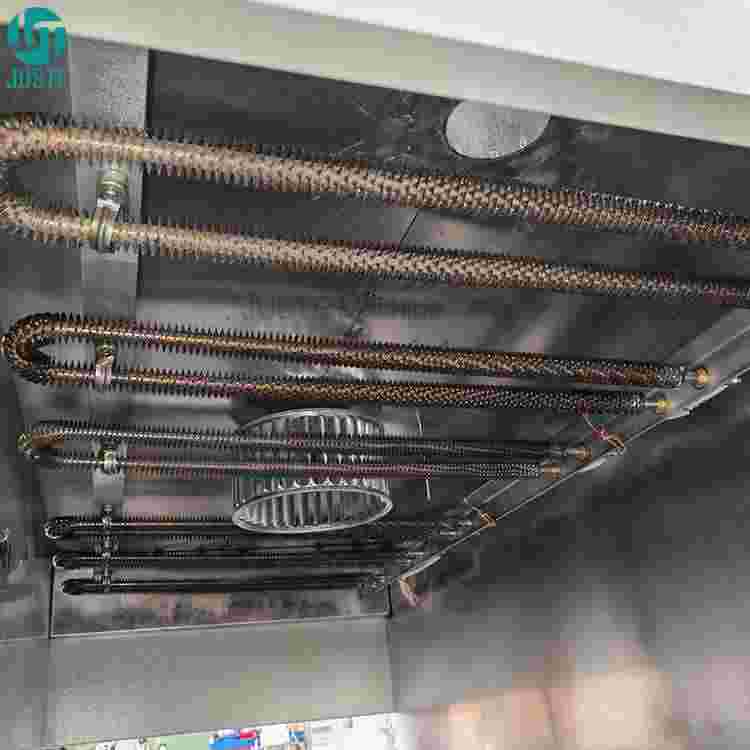
Principle: Utilizes thermal energy generated by infrared (IR) radiation.
Process: IR emitters (typically quartz tubes, ceramic panels, or metal sheathed elements) generate infrared radiation. These invisible electromagnetic waves penetrate air and are absorbed by the substrate and the ink/coating, converting into molecular vibration (heat). This heat either evaporates solvents or water (in solvent-based or water-based inks) or triggers thermal polymerization reactions (in specific heat-curable inks). Curing times are significantly longer, ranging from tens of seconds to several minutes.
Key Components: IR emitters (Short-wave, Medium-wave, or Long-wave), reflectors, insulated heating chamber/tunnel, conveyor belt, ventilation/exhaust system (critical for removing solvent vapors).
II. UV Oven vs IR Oven for Screen/Pad Printing: Key Selection Factors
1. Ink Type (The DECISIVE Factor!):
If you use UV inks/coatings: A UV oven is the ONLY and OPTIMAL choice. IR ovens cannot effectively cure UV chemistry.
If you use solvent-based or water-based inks: An IR oven is the traditional and common solution. UV ovens cannot dry these inks (they lack photoinitiators).
Certain special heat-curable inks (non-UV) also require IR ovens.
2. Substrate Material:
Heat-Sensitive Materials (e.g., Plastics – PVC, PET, PP, PE; thin films; adhesive labels; electronic components): UV curing (especially LED UV) is strongly preferred. Its near-ambient temperature process prevents substrate warping, shrinkage, or damage to sensitive parts.
Heat-Tolerant Materials (e.g., Metal, glass, ceramics, some engineered plastics): Both IR and UV ovens can be considered, but the final decision hinges primarily on your ink type.
3. Production Speed & Throughput Requirements:
Need high-speed, continuous production? UV ovens (especially with LED UV) offer lightning-fast, second-scale curing. This easily keeps pace with high-speed screen/pad printing lines, dramatically boosting overall throughput.
Moderate speeds or lower volume needs? IR ovens can be sufficient (provided they match your ink type), though curing times are a bottleneck.
4. Energy Efficiency & Operating Costs:
Concerned about long-term electricity bills? UV ovens (especially LED UV) are typically far more energy-efficient in high-speed scenarios. They operate at full power only when substrates pass under the lamps, and exposure times are extremely short. IR ovens require continuous heating of the entire chamber, consuming significant energy even during idle periods.
Using solvent-based inks? Factor in the cost of solvents and the mandatory investment in effective exhaust/abatement systems (like RTOs or RCOs) when calculating IR oven operating costs.
5. Environmental Regulations:
Prioritizing green manufacturing? UV curing (with UV inks) is the clear eco-friendly winner. UV inks are typically 100% solids, meaning virtually zero VOC emissions, helping you comply with stringent environmental standards.
IR ovens processing solvent-based inks generate significant VOCs, requiring robust (and costly) exhaust treatment systems to meet regulations.
6. Upfront Investment Budget:
Budget constrained? Basic IR ovens generally have a lower initial purchase price than UV ovens of comparable capacity (especially traditional mercury lamp UV systems). However, always evaluate long-term operating costs.
Budget available, seeking long-term ROI? High-quality LED UV ovens, while requiring a higher upfront investment, deliver superior Total Cost of Ownership (TCO). Benefits include exceptionally long lamp life (20,000-30,000+ hours), minimal maintenance, and outstanding energy efficiency.
7. Floor Space Limitations:
Working with limited factory space? UV ovens, thanks to their rapid curing speeds, are typically much shorter in length than IR ovens needed for equivalent throughput, offering significant space savings.
III. Recommended Application Scenarios
Prioritize a UV Oven When:
You are using UV screen printing inks or UV pad printing inks.
Printing on heat-sensitive substrates (plastics, films, labels, wood, paperboard, electronic components).
Requiring very high production speeds (e.g., large-scale industrial manufacturing).
Operating under strict environmental regulations (minimizing/eliminating VOCs).
Needing to conserve valuable production floor space.
Requiring instantaneous curing for immediate downstream processing (e.g., multi-color registration, inline inspection, packaging).
Prioritize an IR Oven When:
You are using traditional solvent-based or water-based screen/pad printing inks.
Printing on heat-tolerant substrates (metal, glass, ceramics, high-temp plastics) and high speed is not critical.
Your initial budget is extremely tight.
You already have robust solvent recovery or exhaust treatment infrastructure in place.
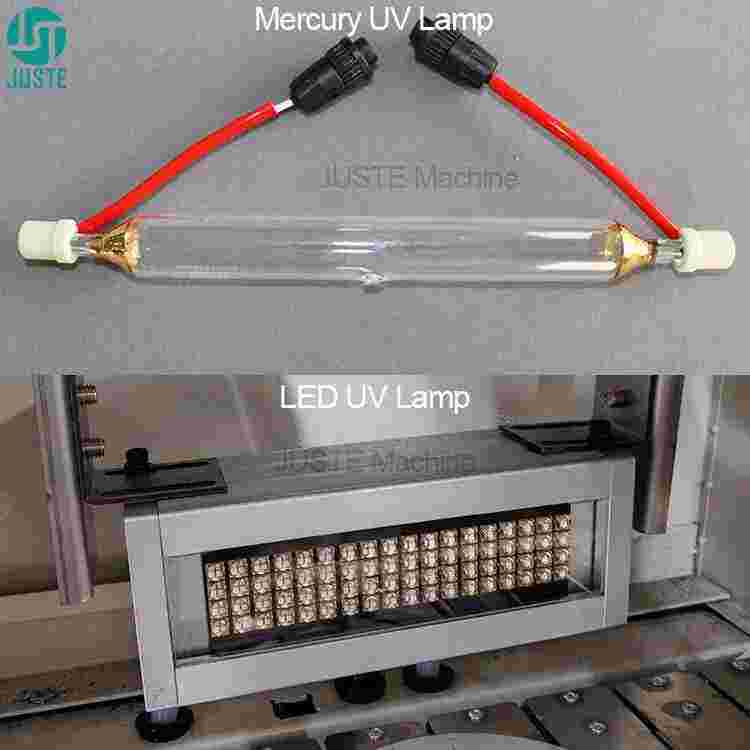
IV. Advanced UV Oven Choice: Mercury Lamp vs LED UV
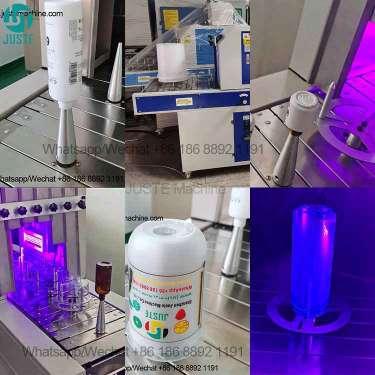
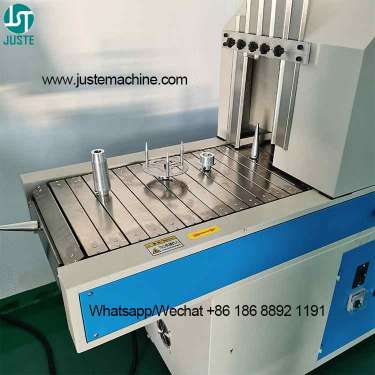
Traditional Mercury Arc / Metal Halide Lamp UV Ovens:
Pros: Mature technology; generally lower initial investment; broad UV spectrum capable of curing most standard UV inks.
Cons: High energy consumption; significant heat output; require warm-up and cooldown periods; short lamp life (~1,000-1,500 hours); contain mercury (environmental hazard & disposal cost); require regular, costly maintenance (lamp, reflector, filter replacements).
LED UV Ovens (The Modern Standard):
Revolutionary Advantages: Instant on/off (no warm-up/cooldown); extremely low energy consumption (typically >70% savings vs mercury); minimal radiant heat output (ideal for ultra-heat-sensitive materials); exceptional lamp lifespan (20,000-30,000+ hours); mercury-free (eco-friendly); consistent UV output (no intensity decay over lamp life); potential for custom narrow-spectrum output (maximizing efficiency for specific ink photoinitiators).
Considerations: Higher initial purchase cost; very deep cure or certain heavily pigmented inks might require higher power density or specific wavelength optimization.
V. Conclusion: No “Best” Technology – Only the “Best Fit” for Your Needs
UV curing ovens and IR curing ovens are both essential pillars of post-printing for screen and pad applications. They are not simply “better” or “worse” than each other; they are fundamentally different tools designed to solve distinct manufacturing challenges.
When you use UV inks, or need high-speed, low-temperature, eco-friendly curing on sensitive materials, a UV oven – particularly an advanced LED UV system – is unquestionably the more powerful and future-proof solution. Its unparalleled speed, efficiency, and environmental profile make it increasingly dominant in modern printing facilities.
If you still rely on solvent-based or water-based inks, your substrates can tolerate heat, your speed requirements are modest, and your budget is limited, an IR oven remains a reliable and economical choice. However, its limitations concerning environmental impact, energy use, and suitability for heat-sensitive materials are becoming more pronounced.
The key to making the smartest choice lies in a deep understanding of your specific production requirements:
What ink chemistry do you use?
What substrates are you printing on?
What production speed/throughput do you need?
What is your equipment budget?
How critical are energy efficiency and environmental compliance?
By clearly answering these questions, the optimal post-printing curing equipment (UV oven or IR oven) for your unique screen or pad printing operation will become evident.
Investing in the right curing technology is fundamental to ensuring consistent print quality, maximizing production efficiency, minimizing operating costs, and meeting environmental standards. Taking the time to thoroughly evaluate your needs and understand these two core technologies will deliver significant, long-term returns for your printing business.
Contact Us
Phone: +8618688921191
Whatsapp/wechat: +8618688921191
Email: [email protected]
Home View More