Introduction
Screen printing remains one of the most widely used printing methods across industries such as packaging, textiles, electronics, advertising, and industrial manufacturing. Businesses rely on screen printing machines to produce high-quality graphics, logos, and functional prints with durability and precision.
Among the most commonly used technologies are flatbed screen printing machines and rotary screen printing machines . While both use similar printing principles, they are designed for completely different applications and production environments.
Understanding the difference between these two systems is essential for selecting the right equipment, improving efficiency, and maximizing return on investment.
Contents
Understanding the Technologies
Flatbed Screen Printing Machines
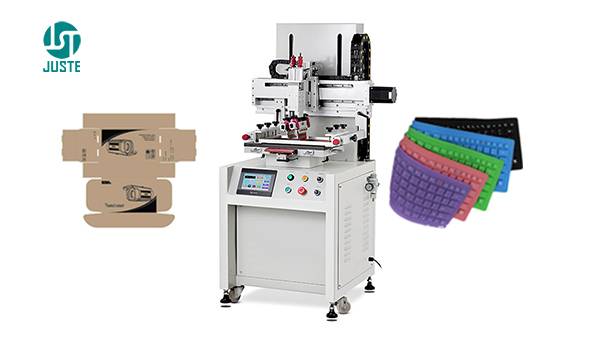
Flatbed screen printing machines are designed specifically for printing on flat surfaces . The process involves a flat screen frame and a squeegee that pushes ink through the stencil onto a stationary substrate.
The material remains fixed during printing while the squeegee moves across the screen to transfer ink evenly.
Suitable Applications:
-
Bags
-
Panels
-
Sheets
-
Posters
-
Glass panels
-
Wooden boards
-
PVC panels
Key Features:
-
Flat printing surface
-
High precision for detailed designs
-
Suitable for rigid and flexible flat materials
Rotary Screen Printing Machines
Rotary screen printing machines use cylindrical screens that rotate continuously during the printing process. The substrate moves in synchronization with the rotating screen, enabling smooth and continuous ink transfer.
This system is designed for high-speed, continuous production , especially where consistent output is required.
Suitable Applications:
-
Continuous roll materials
-
Fabrics and textiles
-
Wallpaper
-
Industrial films
-
Packaging materials
Key Features:
-
Continuous rotation
-
High production speed
-
Suitable for large-scale manufacturing
Key Difference (Important Clarification)
Flatbed screen printing machines and rotary screen printing machines are not the same. Flatbed machines are designed only for flat items such as bags, sheets, and panels, whereas rotary machines are built for continuous and high-speed printing processes on moving substrates.
Quick Comparison Table
| Aspect | Flatbed Screen Printing | Rotary Screen Printing |
|---|---|---|
| Screen Type | Flat | Cylindrical |
| Motion | Linear (back-and-forth) | Continuous rotation |
| Surface Type | Flat only | Continuous materials |
| Production Speed | Moderate | Very high |
| Setup | Simple | Complex |
| Best Use | Small to medium jobs | Large-scale production |
Pros and Cons
Flatbed Screen Printing
Advantages:
-
High print accuracy
-
Suitable for detailed graphics
-
Lower initial investment
-
Flexible for different flat materials
Limitations:
-
Slower production speed
-
Not suitable for continuous production
-
Higher labor dependency
Rotary Screen Printing
Advantages:
-
Extremely high production speed
-
Ideal for bulk manufacturing
-
Consistent print quality in long runs
-
Reduced labor cost per unit
Limitations:
-
Higher initial investment
-
Complex setup and maintenance
-
Less flexible for small batches
ROI Analysis
Choosing between flatbed and rotary systems depends on production scale and business goals.
Low to Medium Production
Flatbed machines provide better ROI due to:
-
Lower capital investment
-
Easier operation
-
Faster setup for smaller jobs
High Volume Production
Rotary machines deliver better ROI because:
-
Higher output
-
Reduced labor costs
-
Increased production efficiency
Which one should you choose?
Choose Flatbed Screen Printing if:
-
You print only on flat materials
-
Production volume is low to medium
-
Budget is limited
-
Design precision is important
Choose Rotary Screen Printing if:
-
You require high-speed production
-
You handle large-scale orders
-
Continuous printing is needed
-
Cost efficiency at scale is a priority
Conclusion
Flatbed and rotary screen printing machines serve different industrial needs. Flatbed machines are ideal for flat surface printing with precision and flexibility, while rotary machines are best suited for high-speed, continuous production environments. Selecting the right technology depends on your production requirements, investment capacity, and long-term growth strategy.